The landscape of corporate relations is undergoing deep and constant transformations. Traditionally, golf courses represented the preferred setting for senior management to seal strategic alliances. However, in 2026, we are witnessing a disruption driven by the economy of padel and pickleball. These sports have ceased to be mere health activities; today, they have become the new incubators for venture capital and low time-cost networking.
At the European Business School of Barcelona (ENEB), we analyze this transition from a rigorously financial and commercial perspective. The current boom responds to a logic of pure spatial optimization and corporate profitability. Private equity funds have detected a massive real estate arbitrage opportunity in urban outskirts. In this article, we break down how efficiency per square meter has dethroned traditional and costly country clubs.
The New Ecosystem of Low Time-Cost Executive Networking
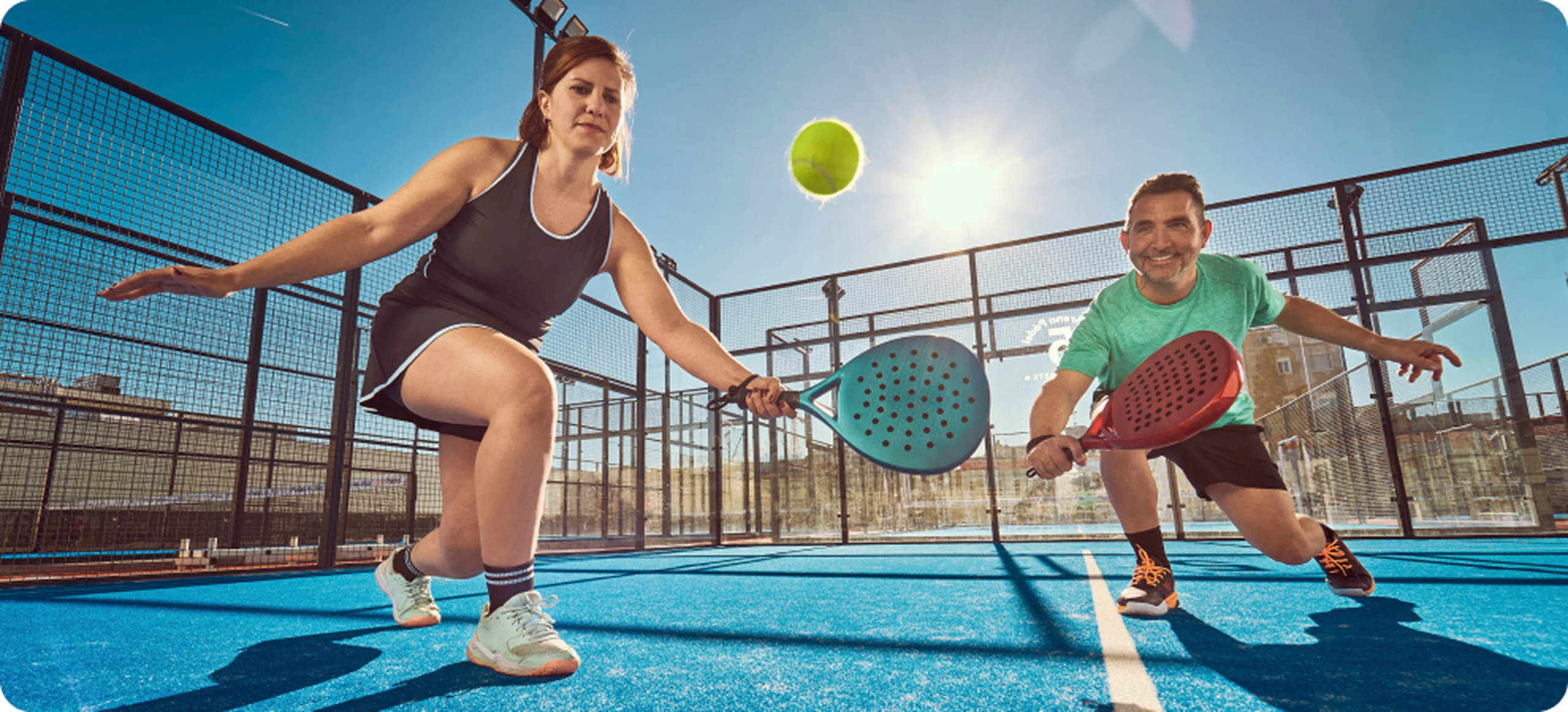
Time scarcity is the primary challenge facing any contemporary executive. Golf requires full-day commitments of four or five hours to complete a round. This high time-cost is unsustainable for the current dynamics of tech corporations and fast-growing startups. Padel and pickleball resolve this inefficiency by offering high-intensity interactions within an operational window of just sixty to ninety minutes.
This faster pace does not decrease the quality of strategic contacts; rather, it significantly enhances them:
- Direct Communication: Operating in pairs within a closed physical environment fosters constant, direct, and very close communication.
- Low Entry Barrier: The technical learning curve is low, allowing leaders of different profiles to play together from day one without frustration.
- Real-Time Evaluation: It serves as an excellent tool for evaluating the leadership and behavioral traits of potential business partners in real time.
Real Estate Arbitrage: From Abandoned Warehouses to High-Profit Goldmines
The success of this model lies in a core asset management concept: land arbitrage. Private equity funds are massively acquiring abandoned industrial warehouses or disused logistics facilities. These real estate assets are strategically located on city outskirts, near major corporate business parks. The acquisition cost of these industrial square meters is comparatively low relative to urban commercial or residential land.
Transforming these gray warehouses into premium racket sports clubs shifts the value of the asset. Industrial land is repositioned as a highly valued infrastructure for premium leisure and high-turnover executive networking. This reconversion generates stable and highly predictable free cash flows for the institutional investors financing the facilities. The execution speed of this model vastly outperforms that of traditional residential or commercial developments.
Optimizing the Square Meter vs. Golf’s Inefficiency
To understand the financial magnitude of this trend, we must compare the land use efficiency of both disciplines:
| Sport | Land Required | Capacity & Efficiency | Operational Burden |
| Golf | ~60 hectares (148 acres) | Low turnover per square meter | Extremely expensive maintenance (water, landscaping, specialized staff) |
| Padel | 200 square meters (20m x 10m) | 4 high-net-worth executives simultaneously | Low maintenance overhead, highly automated operations |
A standard golf course requires an average of sixty hectares of fertile land. In stark contrast, a regulation padel court occupies a small footprint of just $200\text{ m}^2$. If we apply this ratio to a medium-sized industrial warehouse, an investor can host more than fifteen operational courts yielding returns simultaneously. Pickleball maximizes this efficiency even further, allowing up to four courts within the space of a single traditional tennis court.
Financial Breakdown of Racket Club Profit Margins
The revenue model of these complexes stands out for its aggressive diversification of recurring revenue streams. The financial baseline starts with hourly court rental fees, which skyrocket during peak hours. Additional lucrative streams feed into this cash flow:
- Premium racket and ball rentals.
- Branded pro-shop merchandise sales.
- Secure on-site parking fees with negligible maintenance costs.
Gross profit margins for these operations frequently exceed 40% on annual balance sheets. Because courts do not require large numbers of staff to operate, fixed operational costs are kept remarkably low. Booking automation via digital product development platforms simplifies administrative management. Every square meter of the complex is designed to generate constant, high-turnover financial inflows.
The Club Cafe: The True Epicenter of Venture Capital
Any astute financial analyst knows that the true engine of profitability is not found inside the glass walls of the courts. The actual economic epicenter of the complex is the cafe or post-match restaurant area. The so-called “third half” is the social space where the players’ investment and physical effort are truly monetized. The consumption of premium drinks, appetizers, and executive dinners yields the highest net profit margins of the entire operation.
It is precisely at these tables where shareholder pacts are negotiated and startup funding rounds are closed. Venture capital investors find an informal yet highly professional atmosphere to evaluate real business proposals. The adrenaline of the sport gives way to strategic conversations about valuations, scalability, and future business plans. The club is no longer just a sports facility; it formally operates as a high-efficiency corporate incubator.
Conclusion: The Racket as the Ultimate Asset for Corporate Leisure Optimization
The meteoric transition from golf to padel and pickleball is a clear reflection of modern corporate pragmatism. The financial market rewards speed, extreme resource optimization, and profitability per unit of available surface area. These racket sports have proven to be unmatched vehicles for channeling private investment and consolidating powerful executive alliances. The success of this commercial real estate model confirms that modern corporate leisure values time efficiency over past tradition.
For professionals trained in corporate excellence at ENEB, this phenomenon offers a crystal-clear management lesson. Business leadership requires identifying assets capable of maximizing yield while reducing fixed costs and operational downtime. If you can apply this optimization logic to your corporate projects, you will secure a sustainable competitive advantage in your sector. Your startup’s next big investment round might just be signed right after an intense racket match on the city outskirts.
We analyze the rise of padel and pickleball over golf in the corporate world. Discover with ENEB the real estate and financial strategy driving this trend.