In today’s mobile application market, the battle is no longer fought over utility, but over time. Traditionally, educational tools faced an insurmountable obstacle: the lack of consistent motivation. Learning a language requires discipline, effort, and above all, time.
However, from the perspective of the European Business School of Barcelona (ENEB), we analyze the Duolingo case with sharp interest. This platform has successfully transformed the tedious nature of studying into a highly addictive experience.
In the year 2026, the app doesn’t just compete against other language tools. Its true rival is mass entertainment from platforms like TikTok or Netflix. Through extreme gamification, it has secured its business model, evolving from a simple learning app into a powerhouse within the product development sector.
Below, we break down how they leveraged psychology to retain millions of active users.
The Attention Challenge: Competing Against TikTok and Netflix
The greatest enemy of learning is not the difficulty of the subject matter, but instant gratification. Social media platforms are engineered to release dopamine in a matter of seconds. Faced with this, a traditional grammar textbook stands little chance.
The Duolingo team understood that to survive, they had to stop acting like a teacher and start acting like a video game developer. The goal was to capture those “micro-moments” of leisure that users typically spend endlessly scrolling.
- Entertainment Aesthetics: The app was redesigned so every interaction feels rewarding, utilizing vibrant colors, celebratory sounds, and fluid animations.
- Frictionless Delivery: Lessons are bite-sized and fast-paced. Users don’t feel like they are studying; they feel like they are playing a quick game on their subway commute.
For an executive, the lesson is clear: if your product demands effort from the consumer, you must compensate for it with an exceptional user experience (UX). Gamification is a structural necessity in industries with low natural retention.
The Psychological Keys to User Retention
Retention is the ultimate metric in the digital app ecosystem. Duolingo anchors its success on several cognitive biases that hook the user.
The most powerful is loss aversion: the app features mechanics that make users feel like they are losing something valuable if they skip a day of practice. This psychological design allows the app to maintain enviable activity rates compared to its competitors.
Additionally, the platform masters visual progression. Users always know exactly how close they are to reaching the next level (the perfect progress bar). Every completed lesson acts as a micro-victory that prompts the user to consume the next one immediately.
The Streak as a Driver of Daily Engagement
The concept of the “streak” is arguably the company’s most brilliant innovation. By prominently displaying the number of consecutive days a user has practiced, it builds an emotional commitment.
- Psychological Exit Barrier: No one wants to break a 300-day streak due to a simple oversight. This mechanism exploits our need for consistency and pride in accumulated effort.
- Smart Notifications: The app reinforces this with push notifications that leverage humor or mild guilt. This communication tone, embodied by their mascot, went viral online—turning interruption marketing into something celebrated by the community.
Leagues and Competition: The Social Factor
Human beings are competitive by nature. Duolingo capitalizes on this through its weekly leagues. By grouping users into divisions based on performance, it triggers a drive to outperform others.
Seeing someone pass you on the leaderboard provides immediate motivation to complete “just one more lesson.” This social layer extends session times significantly, prevents product monotony, and translates directly into more ad impressions and higher premium subscription conversions.
Product Development: The Owl as a Branding Icon
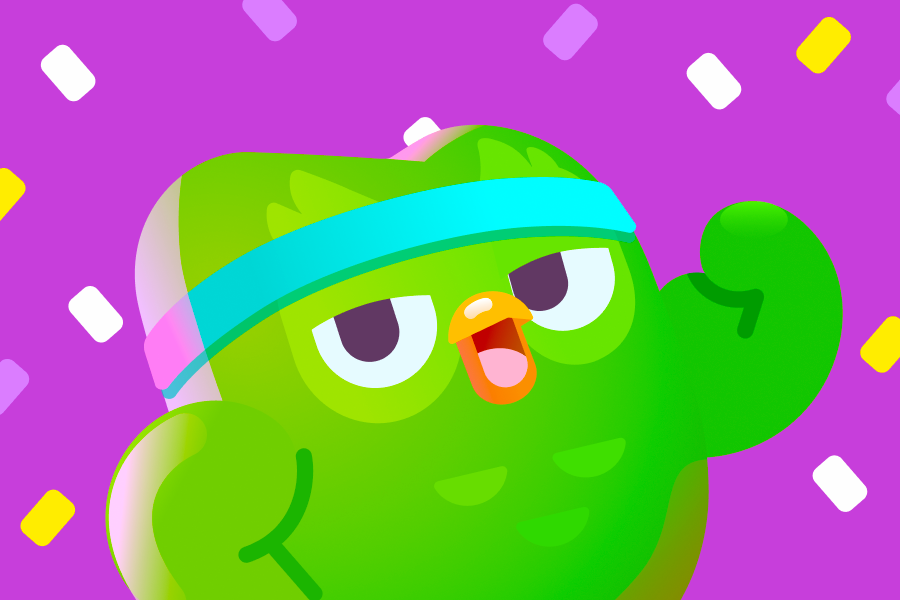
The character of Duo, the green owl, has transcended the app itself. In modern product development, a brand must possess a distinct personality. Duolingo endowed its mascot with a cynical, funny, and relentlessly persistent identity.
This strategy allowed them to dominate platforms like TikTok with content that feels entirely organic. They don’t sell French lessons; they sell entertainment starring their mascot. This branding play has drastically reduced Customer Acquisition Costs (CAC), turning the “fear of the owl’s notification” into a global meme and a powerful intangible asset against new market entrants.
Profitability and the Freemium Business Model
The blueprint behind this free app’s profitability lies in a game-mechanic balance between its free and premium tiers:
- Resource Scarcity: Free users have limited “lives.” Committing too many errors forces them to wait or watch ads to keep going, creating a frictionless upsell to the paid tier.
- AI Integration: By introducing higher-tier subscription levels powered by advanced large language models, they simulate a 24/7 personal tutor, justifying higher subscription price points.
This ecosystem has built a highly diversified revenue engine spanning advertising, subscriptions, and official language certifications—steadily driving up Customer Lifetime Value (LTV).
Conclusion
Duolingo’s success is a masterclass in surviving the attention economy. They proved that any product, no matter how serious, can scale through gamification if it adapts its mechanics to modern digital behavior.
For professionals trained at ENEB, this case underscores that modern product strategy is rooted in psychological connection. In 2026, the reality is undeniable: if you don’t entertain, you don’t exist. The future belongs to businesses that successfully gamify their value proposition.