

In today’s business ecosystem, where digital stimulus saturation has reached unprecedented levels, the ability to capture a customer’s attention no longer depends solely on advertising creativity or massive budgets. In 2026, sales success lies in a deep understanding of the biological and psychological mechanisms that dictate decision-making. Neuromarketing—the discipline merging neuroscience with digital marketing—has evolved from an emerging trend into a fundamental strategic tool for any executive trained in excellence.
At the European Business School of Barcelona (ENEB), we observe how consumer psychology has been transformed through the integration of Artificial Intelligence and real-time biometric analysis. It is no longer enough to know what a user buys; today, it is imperative to understand the subconscious why behind that action. In this article, we will explore how cognitive biases and neural responses are redefining the rules of the commercial game, allowing brands to design experiences that resonate directly within their audience’s limbic system.
The Role of Neuromarketing in the 2026 Digital Ecosystem
Neuromarketing represents the logical evolution of traditional market research. While surveys and focus groups rely on what people say they want—a process often biased by post-hoc rationalization—neuromarketing measures immediate physiological and brain reactions. By 2026, tools such as eye-tracking, galvanic skin response, and facial micro-expression analysis have been democratized through advanced software, allowing even small businesses to optimize their digital marketing with surgical precision.
This discipline enables strategy leaders to identify friction points in a sales funnel before the user is even aware of them. By understanding how the brain processes visual and emotional information, organizations can reduce customer acquisition costs and increase Customer Lifetime Value. In a market where attention is the scarcest asset, applying neuroscience to eliminate noise and connect with instinctive consumer needs is not just an advantage; it is a requirement for corporate survival.
Key Cognitive Biases Driving Sales
For any professional aspiring to lead commercial departments, cognitive biases are the “mental shortcuts” the brain uses to make quick decisions without consuming excessive energy. These biases are universal, and although they operate at a subconscious level, their impact on sales is massive. Understanding how they work allows for the design of digital marketing interfaces and campaigns that guide the user toward conversion fluidly and naturally, minimizing the decision fatigue characteristic of the overinformation era.
Mastering consumer psychology implies recognizing that humans are not rational agents, but emotional beings who rationalize their decisions after the fact. In 2026, the brands leading the market are those that have successfully mapped these biases within the customer journey, creating environments where the client feels in control while the decision architecture is carefully optimized to favor company goals.
The Anchoring Effect and Value Perception
The anchoring bias is one of the most powerful pillars in pricing and negotiation. This phenomenon occurs when the human brain relies too heavily on the first piece of information it receives (the “anchor”) to make subsequent judgments. In digital sales, presenting a higher initial reference price makes any subsequent offer seem significantly more attractive, regardless of the product’s actual value. In 2026, this technique has been sophisticated through algorithmic personalization, adjusting reference prices based on browsing history and perceived purchasing power.
Loss Aversion and Digital FOMO
Neuroscience has shown that the pain we feel when losing something is approximately twice as intense as the pleasure we experience when gaining something of equal value. This loss aversion principle is the engine behind the scarcity and urgency strategies dominating contemporary digital marketing. The Fear of Missing Out (FOMO) activates the amygdala, pushing the consumer to act impulsively to avoid “losing” an exclusive offer or product.
Neuroscience-Based Digital Marketing Strategies
The practical implementation of neuromarketing in 2026 requires seamless integration between User Experience (UX) design and data analysis. One of the most effective tactics is the use of visual hierarchy based on biological reading patterns. Understanding that the human eye tends to scan in “F” or “Z” patterns allows for placing Call to Action (CTA) buttons at points of maximum neural heat.
Furthermore, the use of color and typography has shifted from an aesthetic issue to a strategic one. In consumer psychology, specific tones trigger specific hormonal responses; for example, blue can lower heart rate and build trust in the financial sector, while orange can stimulate appetite and impulsivity in retail. In 2026, digital asset optimization includes neural A/B testing, measuring not just the click, but the intensity of the emotional response each visual element provokes.
Ethics in Neuromarketing: The Line Between Persuasion and Manipulation
At ENEB, we emphasize that the great power of these tools carries a proportional ethical responsibility. Using neuromarketing to “hack” the consumer’s mind must not be confused with deceptive manipulation. Corporate ethics dictate that neuroscience should be used to improve the customer experience, helping them find solutions that truly add value to their lives.
Transparency in neural data processing and respect for consumer autonomy are the pillars of neuroethics. In 2026, consumers are more aware than ever of these tactics; therefore, companies operating in an ethical gray area face devastating reputation crises. The key to success lies in using knowledge of consumer psychology to remove barriers and facilitate processes, creating a relationship of mutual benefit.
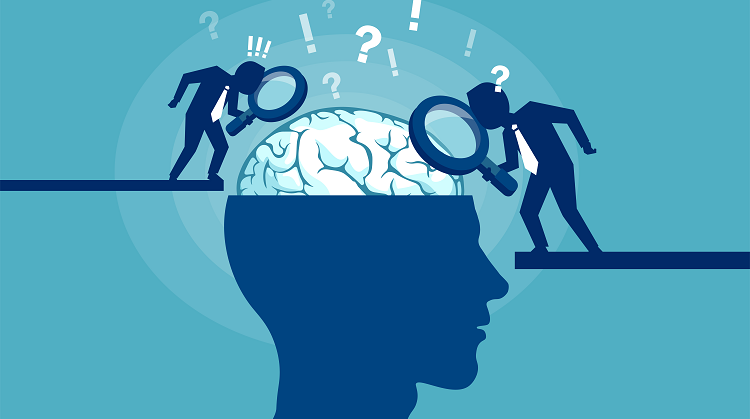
The Future of Consumer Psychology: Toward Predictive Marketing
Looking toward the immediate future, neuromarketing is moving toward predictive hyper-personalization. Thanks to quantum computing and deep learning, companies will be able to predict with astonishing accuracy when a consumer will enter a “purchase intent” mental state based on subtle changes in their digital behavior. This level of anticipation will allow digital marketing to be less intrusive and more helpful, offering solutions just as the user’s brain begins to formulate a need.
The challenge for future leaders will be to integrate these technologies without losing the human touch. Machines can analyze neural data, but only strategic leadership can interpret that data to build brand stories that inspire and motivate. You can learn and prepare yourself for the challenge in our training programs.
Conclusion
Neuromarketing in 2026 is no longer a laboratory science; it has become the everyday language of successful business. Understanding cognitive biases and brain function is not an option for the modern executive, but a core competency. Ultimately, “hacking” the consumer’s mind is not about forcing wills, but about tuning the company’s value proposition to the biological reality of the human being.
Ultimately, “hacking” the consumer’s mind isn’t about forcing wills, but about aligning the company’s value proposition with the biological reality of humans. Leaders who know how to balance the use of these powerful neuroscientific tools with a strong ethical foundation and a humanistic vision will succeed.